
HEIWEL Hospital • Pathology & Diagnostics
Why diagnostic tests are used
A diagnostic test is useful when it answers a specific clinical question. A doctor may order a blood test to evaluate symptoms such as weakness or fever, to monitor a known condition or to prepare a patient for a procedure. Imaging and pathology can provide additional information when the clinical assessment alone is not enough. We provide laboratory diagnostics as a core component of our multispeciality hospital services. We also note that the fourth-floor sample collection room is dedicated only to blood sample collection. Patients should follow our instructions about where and when samples are collected and should not assume that every test requires the same preparation.
Haematology Tests We Provide
Our haematology service includes CBC (Complete Blood Count), Platelet Count, General Blood Picture (GBP), Retic Count, Absolute Eosinophil Count and ESR. A CBC reports several blood-cell measurements and is commonly used in the evaluation of anaemia, infection, inflammation and other clinical conditions. Platelet count is relevant to bleeding and clotting assessment, while ESR is a non-specific marker that can be considered in the context of inflammation and other conditions. A General Blood Picture provides microscopic or morphological information about blood cells. Reticulocyte testing can provide information about red-cell production. These tests should be interpreted with symptoms, examination and the laboratory's reference ranges.
Clinical pathology: urine and stool testing
We provide Urine R/M, Stool R/M and Spot Urine Protein Creatinine Ratio under Clinical Pathology. Urine testing can help clinicians investigate urinary symptoms, infection, kidney-related concerns and other conditions. Stool examination may be used for selected gastrointestinal or parasitic investigations. A urine protein-to-creatinine ratio can help quantify protein excretion in a convenient sample when clinically indicated. The exact significance of an abnormal result depends on the patient's symptoms, kidney function, medications and other findings. Patients should use the sample containers and collection instructions supplied by the laboratory because poor sample collection can affect results.
Microbiology and culture tests
our microbiology service includes sputum culture, swab culture, blood culture, urine culture and pus culture. Culture testing is designed to identify microorganisms from an appropriate specimen and can help guide treatment when infection is suspected. Sample quality, collection before or after antibiotics, transport and the clinical site all influence the value of the result. A culture report may take longer than a routine blood count because the laboratory needs time to grow and identify organisms. Patients should not start, stop or change antibiotics solely from reading a culture report online; the clinician needs to interpret the result in the context of the infection and the patient's medical condition.
Immunology and immunoassay testing
We provide T3, T4, TSH, free T3, free T4, Vitamin D3, PSA and TORCH IgG/IgM in its Immunology & Immunoassay section. Thyroid tests are commonly used to assess thyroid function, while PSA may be used as part of evaluation in selected male patients. TORCH antibody testing and Vitamin D testing have specific clinical contexts and should not be ordered as generic screening without medical advice. One important principle is that a test result does not equal a diagnosis. Hormonal values can vary with age, medications, pregnancy, illness and other factors. A doctor should interpret the report using the relevant reference interval and clinical history.
Histopathology and biopsy testing
We provide Biopsy Testing under Histopathology. Histopathology examines tissue under a microscope and can provide important information when a tissue diagnosis is required. The meaning of a biopsy report depends on where the tissue came from, why it was taken, how it was processed and the clinical findings that prompted the biopsy. Patients receiving a pathology report should review it with the treating doctor, who can explain whether more tests, surgery, specialist referral or follow-up is appropriate. It is common for patients to search individual terms from a pathology report online, but isolated words can be misleading without context.
Cytology: FNAC, Pap Smear and fluid studies
Our cytology service includes FNAC, Body Fluid Cytology, Pap Smear, Fluid R/M, AFB Stain and Gram Stain. FNAC, or fine-needle aspiration cytology, can be used to examine cells collected from a lump or lesion when clinically indicated. Pap smear is used to collect cervical cells for cervical-health evaluation. Fluid cytology examines cells present in selected body fluids. Gram and AFB staining are laboratory techniques used for specific infection-related investigations. Not every patient needs every cytology test; selection depends on the clinical question. Abnormal cytology should be discussed with the treating clinician because further evaluation may be required.
Coagulation studies
We provide BT (Bleeding Time), CT (Clotting Time), Prothrombin Time and APTT under Coagulation Study. These tests are used in different clinical settings to evaluate aspects of blood coagulation. They may be considered before selected procedures, when abnormal bleeding is suspected, for monitoring certain treatments or in specific medical conditions. The correct interpretation depends on the test method, reference range, medications and clinical situation. A patient taking blood-thinning medication should tell the doctor and laboratory staff rather than stopping medicine on their own.
Biochemistry: KFT, LFT, lipids and enzymes
our biochemistry service includes KFT (Kidney Function Test), Lipid Profile, LFT (Liver Function Test), Electrolytes, Serum Lipase and Serum Amylase. Kidney and liver panels contain measurements used to assess selected aspects of organ function, while electrolytes help evaluate fluid and mineral balance. Lipase and amylase can be used in selected evaluations involving the pancreas. A lipid profile measures blood fats relevant to cardiovascular risk assessment. Reference ranges vary by laboratory, and a single abnormal value may require repeat testing or correlation with other results. The clinical purpose of the test should always guide interpretation.
Ultrasound, 2D Echo, ECG, X-Ray and ABG
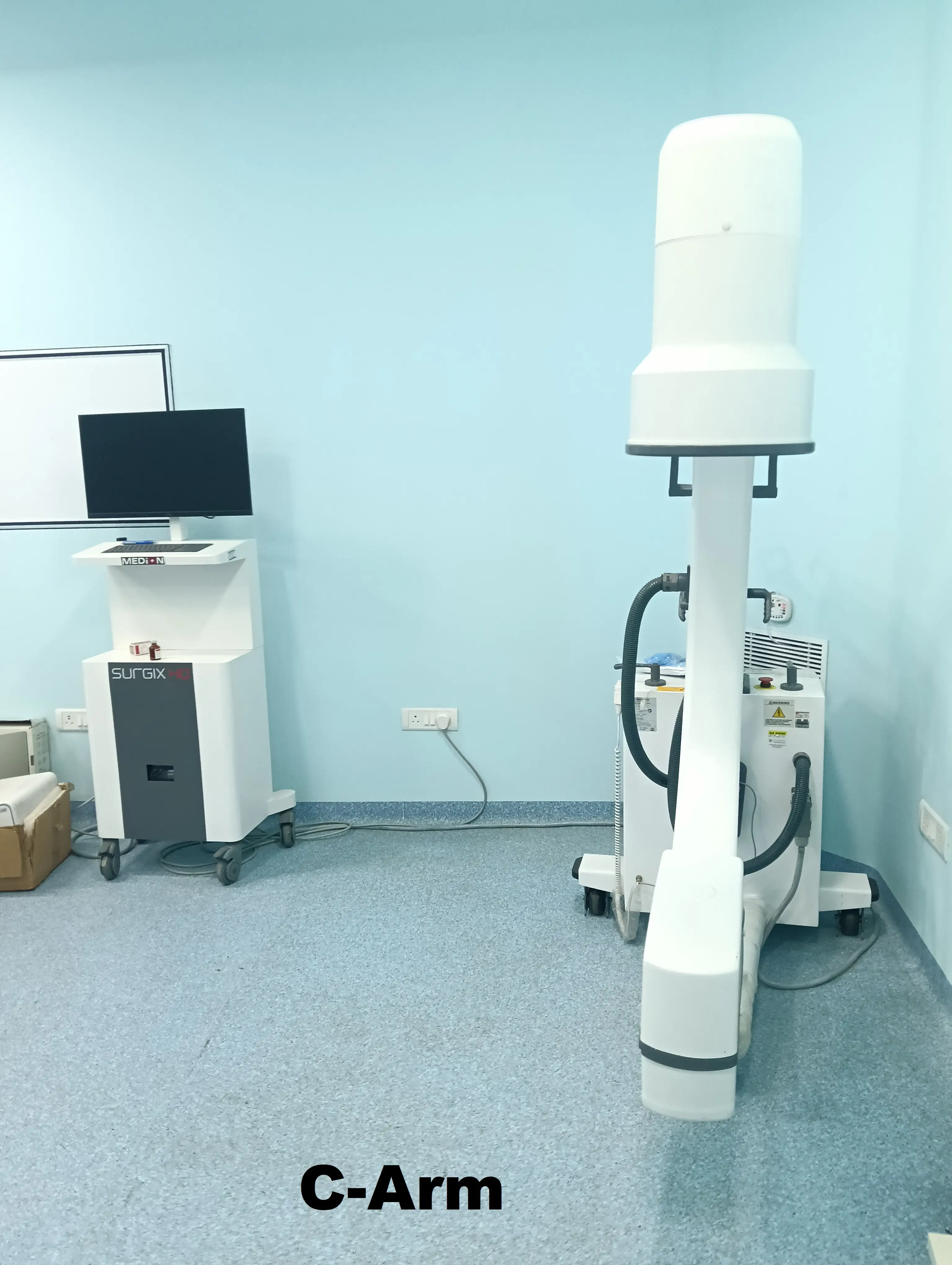
In addition to laboratory pathology, we provide USG/Ultrasound, 2D Echo, ECG, X-Ray and ABG among our diagnostic support facilities. Ultrasound uses sound waves to create images of internal structures and is used for many abdominal, pelvic and pregnancy-related evaluations. An ECG records the heart's electrical activity. A 2D Echo uses ultrasound to assess cardiac structure and function. X-Ray is used in many settings including selected chest and bone evaluations. ABG, or arterial blood gas testing, provides information about oxygenation, carbon dioxide and acid-base status in appropriate clinical situations. Each test answers a different question and is not interchangeable with the others.
Our Preventive Health Packages
We also provide preventive health checkup packages, including Comprehensive Silver and Comprehensive Gold, alongside a Surgical Package. Our promotional material includes examples such as CBC, fasting blood sugar, lipid profile, LFT and KFT for the Silver package, and additional items such as serum calcium, ESR and HbA1c for the Gold package. We ask patients to re-confirm package prices before booking. This is important because prices, availability and package contents can change. Patients should choose tests based on clinical needs rather than assuming that a larger package is always more appropriate.
How to prepare for a test
Preparation depends on the test. Some blood investigations may require fasting, while others do not. Some samples need a specific collection method or timing. Imaging can have its own instructions. Patients should follow the exact laboratory instructions rather than using a generic internet checklist. Bring the prescription or test request, identification and previous relevant reports. Tell the staff about medicines, pregnancy where relevant, allergies and any difficulty with previous blood draws. When a test is part of a hospital admission or procedure, the treating team may provide additional instructions.
How to read a laboratory report safely
A report normally includes the patient's value, a reference interval and sometimes comments from the laboratory. A result outside the reference interval does not automatically mean disease, and a result inside the interval does not guarantee that everything is normal. Age, sex, pregnancy, medications, fasting status, timing and existing conditions can all affect interpretation. Patients should avoid using internet calculators or isolated social-media posts to diagnose themselves. The most useful approach is to take the report to the clinician who ordered it and ask what the result means for the specific clinical question.
Why one abnormal result may not tell the whole story
Laboratory reports are often more nuanced than a simple high-or-low flag. Results can be affected by fasting status, hydration, medicines, time of day and the patient's current illness. A value outside a reference interval may be clinically important, mildly abnormal or unrelated to the symptom being investigated. A normal result can also fail to exclude a condition when the wrong test was used or the disease is at an early stage. Our broad laboratory service menu allows us to investigate many clinical questions, but interpretation remains the job of the doctor who knows the patient's history and examination.
Cultures and sample timing
our microbiology service includes sputum, swab, blood, urine and pus cultures. Culture testing is sensitive to sample quality and timing. When possible and clinically appropriate, the treating team may want an appropriate sample collected before antimicrobial treatment, but this depends on the situation and must not delay emergency care. Patients should use the container and instructions supplied by the laboratory and provide the sample exactly as requested. A positive culture does not automatically prove that a particular medicine is required; the organism, susceptibility results and clinical findings must be considered together.
Pathology, FNAC and biopsy reports
A biopsy or FNAC report can contain technical terminology that is difficult to interpret without clinical context. We provide Biopsy Testing under Histopathology and FNAC, Pap Smear and Body Fluid Cytology under Cytology. These tests evaluate cells or tissue rather than simply measuring a biochemical value. The final interpretation may need to be combined with imaging, examination and the original reason for sampling. Patients should avoid making major treatment decisions based on one report without discussing it with the clinician. Where further surgery or specialist review is needed, the doctor can explain the next step.
Pre-operative and hospital diagnostic testing
Patients coming to us for a planned procedure may be asked to complete laboratory or diagnostic investigations as part of pre-operative assessment. Depending on the procedure and medical history, this can include blood counts, kidney or liver assessment, glucose testing, coagulation studies, ECG or imaging. The fact that we provide a test does not mean every surgical patient needs it. The appropriate pre-operative work-up is based on the operation, age, existing disease and anaesthesia considerations. Ask which tests are required, whether fasting is necessary and how long the results remain valid for the planned procedure.
Choosing the right test rather than the largest package
Patients sometimes believe that ordering more tests provides more certainty. In practice, unnecessary tests can create incidental findings that lead to extra appointments or investigations. We provide health checkup packages with selected panels and ask patients to re-confirm prices before booking. A better approach is to clarify the purpose of the checkup and discuss which tests are relevant. For someone with symptoms, targeted diagnostic work may be more useful than a generic package. For someone seeking preventive care, risk-based screening is generally more meaningful than an indiscriminate collection of laboratory tests.
When should a patient repeat a laboratory test?
Repeat testing is sometimes useful when a result is unexpectedly abnormal, when a condition is being monitored or when the doctor wants to see whether a change persists. The interval should be based on the test, the clinical situation and the treatment plan. Repeating a test immediately without a clinical reason may not add useful information. Patients should ask why a repeat is needed, when it should be performed and whether any preparation such as fasting is required.
About HEIWEL Hospital, Varanasi
We are located at NH-56, Airport Road, Near Sant Atulanand, Gilat Bazar, Chotta Chuppepur, Varanasi, Uttar Pradesh – 221002. We provide multispeciality care spanning surgery, women's health and fertility, critical care, orthopaedics, diagnostics and other departments, with 24x7 emergency and ambulance support highlighted on the main page.
Frequently Asked Questions
What blood tests do we provide at HEIWEL Hospital?
We provide CBC, platelet count, General Blood Picture, reticulocyte count, absolute eosinophil count, ESR and several biochemistry, immunology and coagulation tests.
Does HEIWEL offer biopsy and FNAC testing?
Yes. Histopathology includes biopsy testing, while cytology includes FNAC, Pap Smear and body-fluid cytology.
Does every blood test require fasting?
No. Fasting depends on the specific test and the instructions provided by the doctor or laboratory.
Can I diagnose myself from an abnormal blood test?
No. Laboratory values need to be interpreted with symptoms, examination, medical history and the laboratory reference interval.
Continue Your HEIWEL Health Journey
Explore closely related guides and services for patients in Varanasi.
HEIWEL Hospital in Gilat Bazar, Airport Road, Varanasi
At HEIWEL Hospital, we serve patients from across Varanasi and surrounding areas from our location on NH-56, Airport Road, near Sant Atulanand, Gilat Bazar, Chotta Chuppepur, Varanasi – 221002. Our hospital brings together specialist consultations, diagnostics, inpatient care, surgical services and patient-support facilities in one healthcare setting.
Patients searching for pathology & diagnostics in Varanasi, a hospital near Airport Road, healthcare near Gilat Bazar or multispeciality care in the Chotta Chuppepur area can use this guide to understand the relevant care pathway before contacting us. For current doctor availability, appointment timing, procedure availability, insurance authorization and package information, please contact us directly.
Talk to HEIWEL Hospital
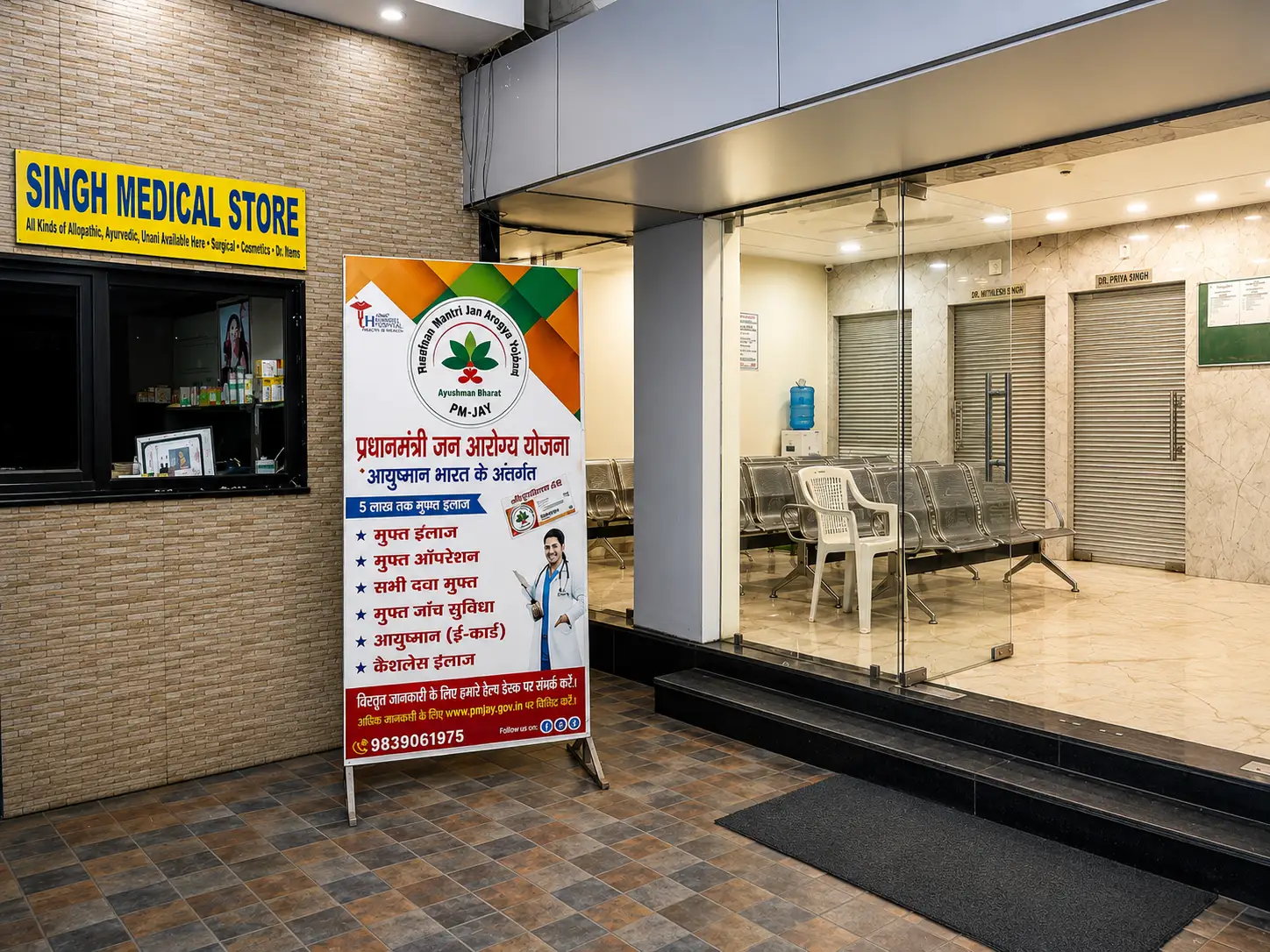
Our patient-support team can help you with department information, appointment scheduling, diagnostic services, PM-JAY and insurance questions, and hospital visit preparation.
Book an Appointment Call +91 98390 61975