
HEIWEL Hospital • IVF & Fertility
What IVF means
In vitro fertilisation, commonly called IVF, is an assisted-reproduction process in which eggs and sperm are brought together with laboratory support before an embryo is considered for transfer. The treatment is not one single procedure; it is a sequence of assessment, preparation, monitoring, retrieval, laboratory work and follow-up. We provide IVF/IUI alongside our broader Obstetrics & Gynaecology with Infertility service, giving our patients a dedicated fertility-related pathway within our multispeciality setup. Patients should understand that IVF is not automatically appropriate simply because a pregnancy has not occurred. The reason for infertility, the age of the patient, previous treatment history and other clinical factors influence which option a specialist may discuss.
When an infertility assessment is useful
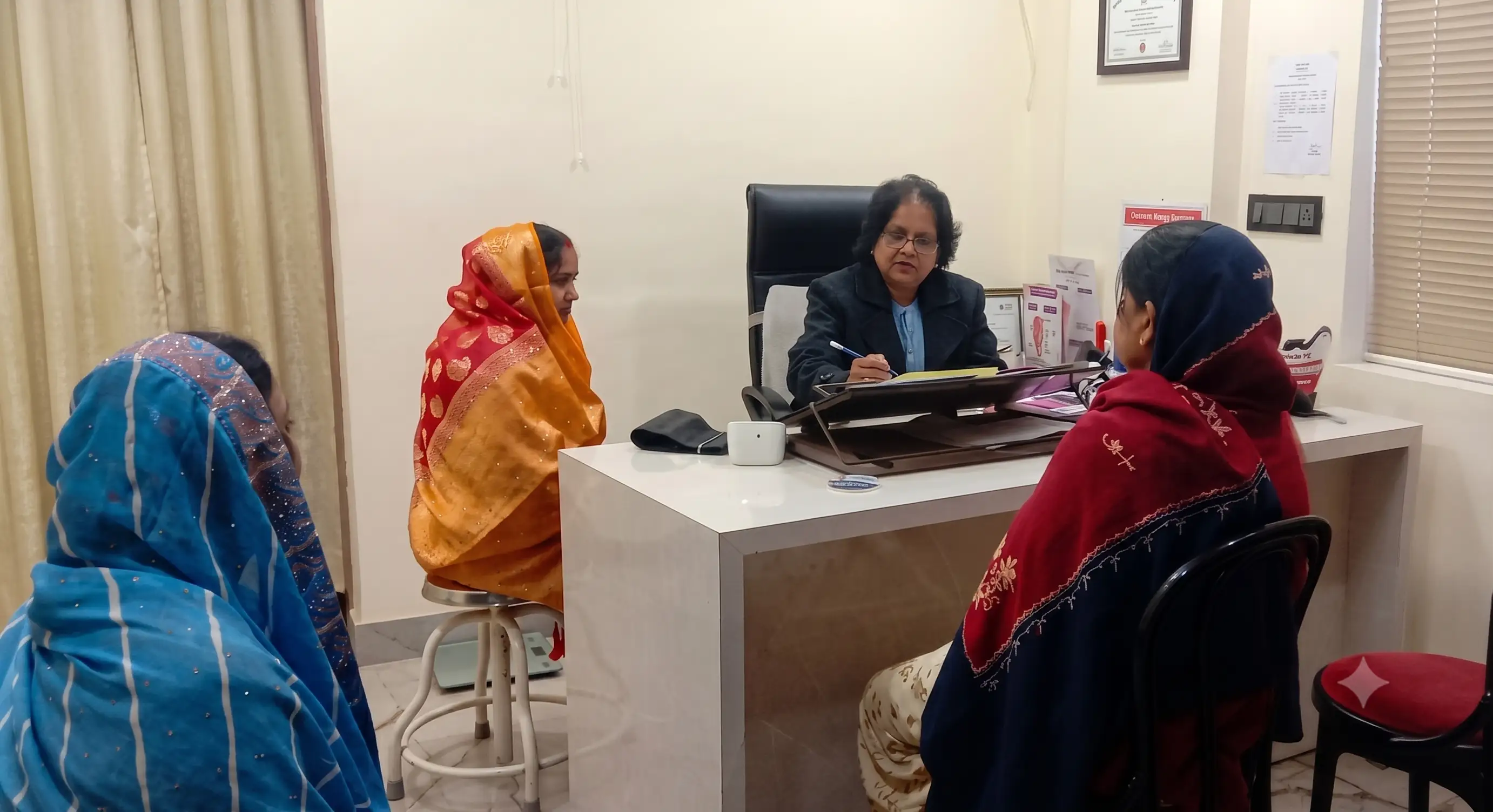
The first step in many fertility journeys is understanding why pregnancy has not occurred. We provide Infertility Assessments, and these consultations can provide a structured review of reproductive history, prior pregnancies, previous surgeries, menstrual history, medicines and other health factors. Fertility assessment may involve both partners because fertility factors can arise from female factors, male factors or a combination. The exact investigations should be chosen by the treating specialist rather than by ordering every available test. Patients can make the first appointment more efficient by bringing previous reports, prescriptions, prior semen analysis or imaging, operative records and details of previous fertility treatment.
Our fertility-treatment pathway
We provide several IVF/IUI components: Ovulation Induction, Egg Retrieval, Sperm Collection, Fertilization in Lab and Embryo Transfer. These entries provide a useful high-level picture of the treatment pathway, but patients should not assume that every person will undergo the same sequence or timing. Some patients may receive IUI rather than IVF, some IVF cycles may be modified after monitoring, and some patients may require additional evaluation before treatment. The clinician's role is to select and explain the approach based on the patient's circumstances. Our service listing should therefore be read as a description of capability, while the actual treatment plan must come from the fertility team.
Ovulation induction and monitoring
Ovulation induction is used in selected fertility treatment plans to encourage the development or release of eggs. Monitoring is important because fertility medicines need to be used according to a defined clinical protocol. Depending on the treatment plan, monitoring may involve ultrasound and laboratory assessments. We provide Ultrasound/USG and pathology among our diagnostic support services. We do not publish a single fertility-monitoring protocol, so patients should ask our fertility team which scans or tests are required. Patients should ask which scans or tests are required, how often they will be performed, what symptoms should be reported between visits and what happens if the response to medication is different from expected.
Egg retrieval and sperm collection
Our IVF/IUI services include Egg Retrieval and Sperm Collection. Egg retrieval is a planned procedure performed after the appropriate stage of ovarian development, while sperm collection is organised as part of the laboratory process. Patients should receive instructions in advance about timing, fasting or medication requirements when applicable, transportation arrangements and what happens on the day of the procedure. The exact anaesthesia or sedation plan depends on the clinic's protocol and the patient's needs. Questions about sample collection, timing and whether a backup plan is available should be discussed before the treatment cycle begins.
Fertilization in the laboratory and embryo development
Our IVF/IUI services include Fertilization in Lab followed by Embryo Transfer. In an IVF pathway, laboratory handling of eggs, sperm and embryos is a critical part of the process. Patients are usually given information about the laboratory stage, the number of eggs retrieved, fertilisation information and the next step based on the clinical plan. We do not publish every laboratory method, embryo-culture protocol or selection criterion in this general guide, so patients should ask our fertility team for current information rather than relying on generic online claims. It is especially important to understand that the number of eggs retrieved does not directly translate into a guaranteed number of embryos or a guaranteed pregnancy.
Embryo transfer and follow-up
We provide Embryo Transfer after the laboratory fertilization stage. The timing of transfer can differ depending on the treatment plan, embryo development and clinical considerations. After transfer, patients may receive medication and instructions regarding activity, follow-up and pregnancy testing. Symptoms after treatment should be discussed with the fertility team, particularly severe pain, heavy bleeding, fever, breathing difficulty or sudden deterioration. Patients should also understand that fertility treatment can involve emotional, physical and financial considerations. Asking about the entire treatment pathway before starting helps reduce uncertainty.
Dr. Pallavi Singh and fertility care at our hospital
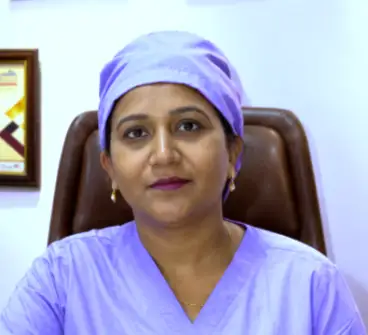
Our doctor team includes Dr. Pallavi Singh with MBBS, DGO, FMAS, FICOG, FRM, and we describe her as an IVF & Reproductive Health Specialist with 23+ years of experience. Her profile is also linked from our website to an external professional page. These clinical details are relevant for patients researching IVF treatment in Varanasi, but current consultation availability and treatment schedules should be verified directly with the hospital. Our doctor team also includes Dr. Mithlesh Singh as a Senior Obstetric Gynaecologist & Infertility Specialist. The presence of both profiles on our hospital indicates that fertility and gynaecology are part of our broader women's-health offering.
What tests may be discussed before IVF?
There is no universal IVF test list that is appropriate for every patient. A fertility specialist may review ovarian, uterine, hormonal or male-factor considerations and select investigations accordingly. Our diagnostic service includes blood-based pathology categories, immunology and immunoassay tests such as T3, T4, TSH, free T3/free T4, Vitamin D3, PSA and TORCH IgG/IgM, as well as ultrasound. The availability of these tests through our services does not mean every fertility patient needs all of them. The correct question is which investigation answers the clinical question relevant to your case.
IVF, IUI and expectations
Patients often search for an IVF success rate or a guaranteed timeline, but fertility outcomes are individual and cannot be promised from a general information from us. Results can vary with age, diagnosis, ovarian response, sperm factors, embryo development, prior treatment and other clinical variables. An honest fertility consultation should explain the uncertainties as well as the available treatment options. IUI and IVF are not interchangeable; the fertility team chooses between them based on the clinical situation. Patients should ask how many visits are expected, what monitoring is required, what medicines are involved, what costs can change during a cycle and what happens if the cycle is modified or cancelled.
Financial and practical planning for fertility treatment
Fertility treatment involves more than the clinical procedure. Patients should ask about consultation fees, investigations, medicines, laboratory charges, procedure-related costs, possible additional services and follow-up. Our main hospital page provides information about selected cashless and reimbursement support through empanelled TPAs, but insurance coverage for infertility treatment is policy-specific and should never be assumed. The TPA desk can be contacted at 9569177755 for hospital-specific insurance questions. PM-JAY coverage also has scheme and package rules; patients should confirm eligibility and whether a proposed service is covered before making financial decisions.
Questions to ask before starting an IVF cycle
Before treatment, ask the fertility specialist to explain the diagnosis being treated, the recommended approach, why IVF or IUI is being considered, what alternative options exist, how medicines will be monitored, what investigations are required, how egg retrieval is performed, what happens in the laboratory, how embryo transfer is planned, what follow-up is expected and what situations would require urgent contact. Also ask for a written estimate where available and clarify what is included. Bringing a partner to the consultation can make it easier to remember instructions and understand decisions about the treatment pathway.
How to organise an IVF treatment cycle
IVF is easier to navigate when patients understand the sequence of appointments before medicines begin. Ask for the anticipated monitoring dates, how medication timing will be communicated, what happens if ovarian response differs from the plan and who should be contacted outside routine hours. We provide ovulation induction, egg retrieval, sperm collection, fertilization in the laboratory and embryo transfer. These services show the broad treatment stages but not a fixed schedule for every patient. The fertility team should provide a patient-specific calendar and explain which appointments are essential.
Male-factor assessment is part of fertility care
Infertility assessment is not exclusively a woman's health process. The fertility team may need information about male reproductive history, previous semen testing, illnesses, surgeries, medicines and lifestyle factors. Our services include infertility assessments and sperm collection as part of IVF/IUI services. Bringing existing male-factor reports to the first consultation can reduce repeated testing. Couples should ask whether both partners need assessment before starting a cycle and which investigations are needed to guide the next decision.
What the laboratory stage means for patients
When we provide Fertilization in Lab, it is describing the laboratory component of the IVF pathway. Patients often have questions about how many eggs will fertilize, how embryos develop and whether transfer will occur. These outcomes are not guaranteed and can vary between cycles. We do not publish a fixed laboratory protocol;, so patients should ask the fertility team to explain the current laboratory process and what information they will receive at each stage. Avoid comparing your individual response with another person's treatment because the clinical circumstances can be very different.
Emotional, practical and family planning considerations
Fertility treatment can involve repeated appointments, injections or medicines, procedures, waiting periods and uncertainty. Couples may benefit from planning transport, work leave, medication storage and a reliable method for recording instructions. It is also useful to decide in advance how treatment-related information will be shared within the family. A partner or trusted attendant can accompany the patient when appropriate and help remember instructions. Our role is to provide fertility and gynaecology services, but each couple's clinical and personal circumstances should guide the treatment plan.
IVF, IUI and financial questions
Patients should understand the financial side of fertility treatment before beginning a cycle. Ask what the consultation, monitoring, medicines, retrieval, laboratory services and transfer include and which costs may be additional. We provide selected TPA and insurance support, but fertility coverage under private insurance is policy-dependent and should never be assumed. PM-JAY rules are also package-specific. We provide a TPA assistance line, 9569177755, for insurance questions. A written estimate and clear explanation of what is included can help families plan without relying on generic IVF prices found online.
After an IVF consultation: build a clear treatment plan
At the end of the fertility consultation, patients should know what the working diagnosis is, whether additional evaluation is required, what treatment is being proposed and what the next appointment will involve. Ask which medicines need to be purchased in advance, how monitoring will occur, how results will be communicated and what circumstances could change the plan. A clear written sequence can reduce missed timings during a cycle. Our IVF/IUI services provide the broad pathway; the treating fertility specialist should define the individual plan.
Timing, monitoring and communication during fertility treatment
Because assisted-reproduction treatment is time-sensitive, patients should have a reliable way to receive appointment and medication instructions. Ask who will communicate scan results, whether the schedule can change after monitoring, what happens if a dose is missed and whom to call for an urgent problem. Our IVF/IUI services include ovulation induction, egg retrieval, sperm collection, laboratory fertilization and embryo transfer. The treating fertility team should translate those stages into a personalised calendar and explain what happens between appointments.
Planning the weeks after fertility treatment
After embryo transfer or another fertility procedure, patients may have questions about medicines, activities and the timing of a pregnancy test or review. Follow the fertility team's specific instructions rather than adopting generic online rules. Seek urgent medical attention for severe pain, heavy bleeding, breathing difficulty, fainting or other sudden deterioration. Fertility treatment can also involve disappointment when a cycle does not proceed as expected; a clear follow-up appointment helps the couple understand the result and discuss the next clinical option.
About HEIWEL Hospital, Varanasi
We are located at NH-56, Airport Road, Near Sant Atulanand, Gilat Bazar, Chotta Chuppepur, Varanasi, Uttar Pradesh – 221002. We provide multispeciality care spanning surgery, women's health and fertility, critical care, orthopaedics, diagnostics and other departments, with 24x7 emergency and ambulance support highlighted on the main page.
Frequently Asked Questions
Does HEIWEL Hospital offer IVF and IUI services?
Yes. We provide IVF/IUI services including ovulation induction, egg retrieval, sperm collection, fertilization in the laboratory and embryo transfer.
Who is part of our IVF and reproductive-health team?
We provide Dr. Pallavi Singh (MBBS, DGO, FMAS, FICOG, FRM) as an IVF & Reproductive Health Specialist with 23+ years of experience.
Does IVF guarantee pregnancy?
No. IVF can provide an assisted-reproduction pathway, but pregnancy is not guaranteed and outcomes vary between patients.
Are fertility tests the same for every patient?
No. The fertility team selects investigations according to the individual's history and clinical needs.
Continue Your HEIWEL Health Journey
Explore closely related guides and services for patients in Varanasi.
Planning treatment from outside Varanasi? Read our Medical Tourism in Varanasi guide →
HEIWEL Hospital in Gilat Bazar, Airport Road, Varanasi
At HEIWEL Hospital, we serve patients from across Varanasi and surrounding areas from our location on NH-56, Airport Road, near Sant Atulanand, Gilat Bazar, Chotta Chuppepur, Varanasi – 221002. Our hospital brings together specialist consultations, diagnostics, inpatient care, surgical services and patient-support facilities in one healthcare setting.
Patients searching for ivf & fertility in Varanasi, a hospital near Airport Road, healthcare near Gilat Bazar or multispeciality care in the Chotta Chuppepur area can use this guide to understand the relevant care pathway before contacting us. For current doctor availability, appointment timing, procedure availability, insurance authorization and package information, please contact us directly.
Talk to HEIWEL Hospital
Our patient-support team can help you with department information, appointment scheduling, diagnostic services, PM-JAY and insurance questions, and hospital visit preparation.
Book an Appointment Call +91 98390 61975